


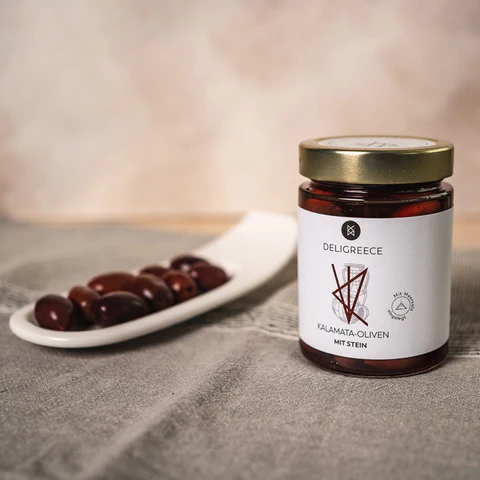
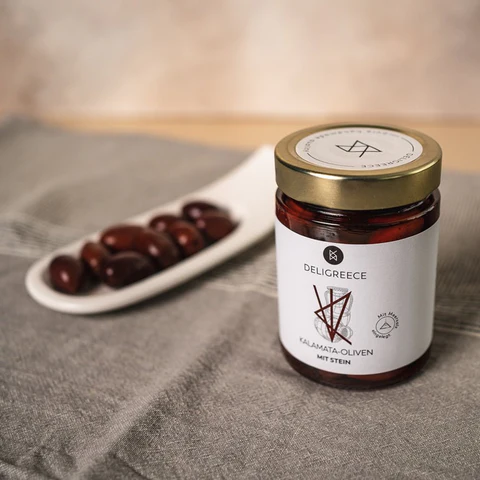
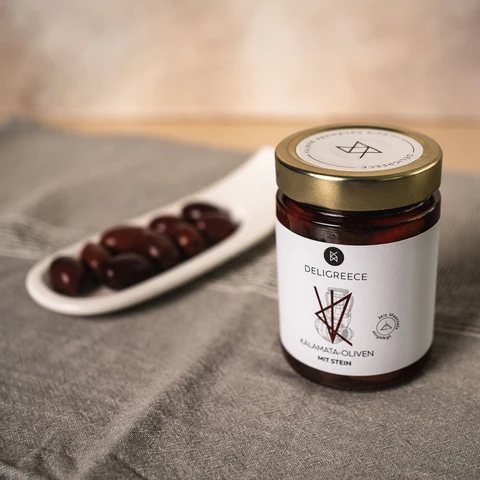
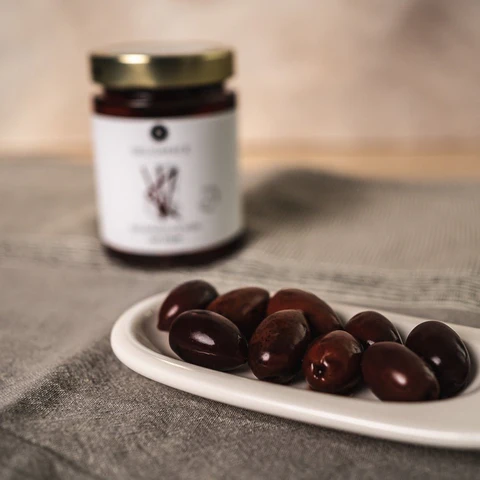
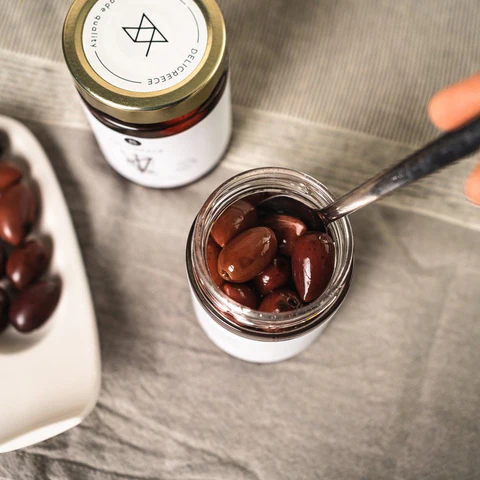
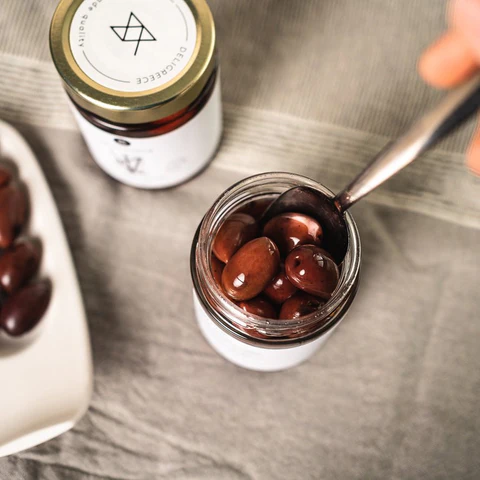
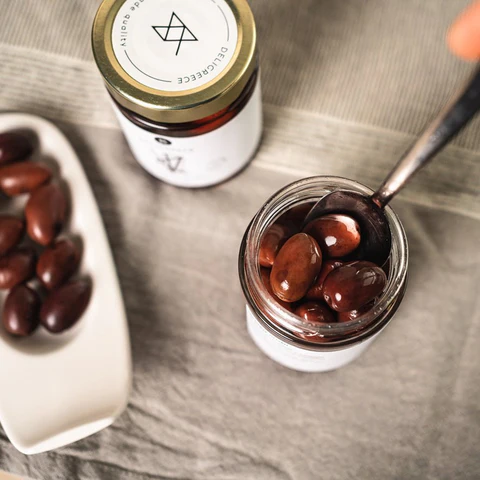
Kalamata olives in sea salt brine
Purple Kalamata olives from Messenia in a mild sea salt brine, a classic of Greek cooking.
- Robust and fruity Kalamata olives with stone
- Farmer's salad, pasta puttanesca, pizza and mezze
- From Messenia on the Peloponnese
- Also for tapenade and braises
- Greek olives by Deligreece

You will receive 33 enjoyment points
Inhalt:

+ 18,667 positive reviews
-
 Free shipping from 49 €
-
 Manufactured in Klingenberg am Main
-
 Free from additives


Kalamata olives in sea salt brine, purple Greek olives from the Peloponnese
Greece’s best-known olive variety from the Messenia region on the Peloponnese. With stone, robust and fruity and with the typical almond shape, in a mild sea salt brine. From Deligreece. Drained weight 350 g.
How to use
A classic for Greek farmer’s salad (choriatiki), pasta puttanesca, pizza and tapenade. A companion to feta, bread, wine and mezze. It refines stews, braises and salad dressings.
Good to know: the olives contain stones. Once opened, store in the fridge and always keep covered with brine, then they keep for about two to three weeks.
Recipe idea: Greek farmer’s salad
Cut 4 tomatoes into chunks, slice 1 cucumber, ring 1 red onion, strip 1 green pepper and cube 200 g of feta block. Add 100 g Kalamata olives with stone. Dress with 4 tbsp olive oil, 1 tbsp red wine vinegar, oregano, salt and pepper.
At a glance
- Purple Kalamata olives with stone
- From Messenia on the Peloponnese, by Deligreece
- Robust and fruity in a mild sea salt brine
- Versatile for farmer’s salad, pasta and mezze
- Drained weight 350 g
Goes well with
For Greek cooking: Greek pyramid salt flakes, Gyros Spice, Grilled Aubergine and Grilled Zucchini. For Mediterranean pasta sauces: yellowfin tuna in olive oil. A salt counterpart: fleur de sel.
Frequently asked questions
Why are Kalamata olives purple?
The colour comes from harvesting fully ripe olives late. The longer the fruit ripens on the tree, the darker and more intense the flavour.
Do the olives have stones?
Yes, Kalamata olives are traditionally sold with the stone, which preserves the full aroma. For tapenade, simply pit them with an olive pitter.
How long do they keep once opened?
About 2 to 3 weeks in the fridge, always kept covered with brine.
Do the olives contain allergens?
They may contain traces of almonds and milk. If you have allergies, please check the label.


